TwistLens: A Docent-Informed Image Transformation to Create Previews That Prompt Anticipation and Interpretive Experiences Before Museum Visits
ACM CHI Conference on Human Factors in Computing Systems (2026)

Summary
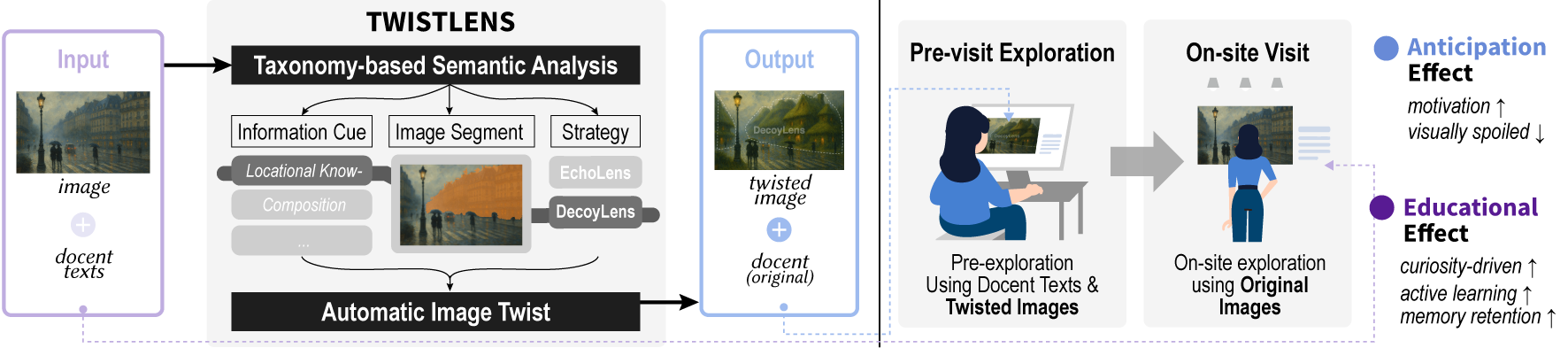
Pre-visit information can enrich museum experiences, but it also creates a preview dilemma: docent descriptions provide interpretive depth yet can be hard to visualize, while original artwork images offer clear visual anchors but may spoil surprise. TwistLens addresses this tension through docent-informed, AI-supported image transformation. The system analyzes artwork descriptions with a structured information taxonomy, segments the image regions connected to key docent cues, and generates transformed previews through two strategies: EchoLens, which preserves the intended meaning while changing visual representation, and DecoyLens, which alters the described information while keeping the overall image coherent. A co-design study with 21 art appreciators refined how each strategy should be matched to different information types, and an evaluation with 20 participants showed that TwistLens increased anticipation and curiosity before visits, preserved surprise during artwork encounters, and supported more active interpretive learning.
Citation
Thao Phuong Vu and Bokyung Lee. (2026). TwistLens: A Docent-Informed Image Transformation to Create Previews That Prompt Anticipation and Interpretive Experiences Before Museum Visits. In Proceedings of the 2026 CHI Conference on Human Factors in Computing Systems (CHI ‘26). Article 789, 1-21. https://doi.org/10.1145/3772318.3790352 :trophy: Honorable Mention Award (Top 5%).
Project Team
Thao Phuong Vu, Bokyung Lee
Keywords
AI algorithm UX, anticipatory experience, preview media, anticipation-preserving, generative AI strategy, image transformation
Acknowledgement
This work was supported by the National Research Foundation of Korea (NRF) grant funded by the Korea government (MSIT) [RS-2024-00340828].

Project section image
Background: The Preview Dilemma
Museum visits often begin before visitors enter the gallery. Websites, brochures, and social media posts help people form expectations through docent text and artwork images. Yet these two preview formats create a tension. Text can carry curatorial interpretation, historical context, and symbolic meaning, but visitors must mentally map that information onto artworks they have not yet seen. Original images, in contrast, make interpretation easier by providing a visual anchor, but they can also reveal too much and flatten the later moment of discovery. TwistLens starts from this dilemma and asks how preview images can provide enough cues for meaningful preparation while still preserving anticipation.
๋ฐ•๋ฌผ๊ด€ ๊ฒฝํ—˜์€ ๊ด€๋žŒ๊ฐ์ด ์ „์‹œ์žฅ์— ๋“ค์–ด๊ฐ€๊ธฐ ์ „๋ถ€ํ„ฐ ์‹œ์ž‘๋ฉ๋‹ˆ๋‹ค. ์ „์‹œ ์›น์‚ฌ์ดํŠธ, ๋ธŒ๋กœ์Šˆ์–ด, ์†Œ์…œ ๋ฏธ๋””์–ด์˜ ํ”„๋ฆฌ๋ทฐ๋Š” ๋„์ŠจํŠธ ์„ค๋ช…๊ณผ ์ž‘ํ’ˆ ์ด๋ฏธ์ง€๋ฅผ ํ†ตํ•ด ๊ด€๋žŒ ์ „ ๊ธฐ๋Œ€๋ฅผ ํ˜•์„ฑํ•ฉ๋‹ˆ๋‹ค. ํ•˜์ง€๋งŒ ์ด ๋‘ ๊ฐ€์ง€ ํ”„๋ฆฌ๋ทฐ ๋ฐฉ์‹์€ ์„œ๋กœ ๋‹ค๋ฅธ ํ•œ๊ณ„๋ฅผ ๊ฐ€์ง‘๋‹ˆ๋‹ค. ํ…์ŠคํŠธ๋Š” ์ž‘ํ’ˆ์˜ ๋งฅ๋ฝ, ์ƒ์ง•, ํ•ด์„์„ ํ’๋ถ€ํ•˜๊ฒŒ ์ „๋‹ฌํ•˜์ง€๋งŒ ์•„์ง ๋ณด์ง€ ๋ชปํ•œ ์ž‘ํ’ˆ์— ๊ทธ ์˜๋ฏธ๋ฅผ ์—ฐ๊ฒฐํ•ด ์ƒ์ƒํ•ด์•ผ ํ•ฉ๋‹ˆ๋‹ค. ๋ฐ˜๋Œ€๋กœ ์›๋ณธ ์ด๋ฏธ์ง€๋Š” ์ดํ•ด๋ฅผ ์‰ฝ๊ฒŒ ๋งŒ๋“œ๋Š” ์‹œ๊ฐ์  ๊ธฐ์ค€์ ์„ ์ œ๊ณตํ•˜์ง€๋งŒ, ์ž‘ํ’ˆ์„ ๋„ˆ๋ฌด ์ผ์ฐ ๋…ธ์ถœํ•ด ์‹ค์ œ ๊ด€๋žŒ์—์„œ์˜ ๋ฐœ๊ฒฌ๊ณผ ๋†€๋ผ์›€์„ ์•ฝํ™”์‹œํ‚ฌ ์ˆ˜ ์žˆ์Šต๋‹ˆ๋‹ค. TwistLens๋Š” ๋ฐ”๋กœ ์ด ๋”œ๋ ˆ๋งˆ์—์„œ ์ถœ๋ฐœํ•ฉ๋‹ˆ๋‹ค. ๊ด€๋žŒ๊ฐ์ด ์ž‘ํ’ˆ์„ ์ดํ•ดํ•  ์ˆ˜ ์žˆ์„ ๋งŒํผ์˜ ๋‹จ์„œ๋ฅผ ์ œ๊ณตํ•˜๋ฉด์„œ๋„, ์›๋ณธ์„ ๋งˆ์ฃผํ•˜๋Š” ์ˆœ๊ฐ„์˜ ๊ธฐ๋Œ€๊ฐ์€ ์–ด๋–ป๊ฒŒ ์œ ์ง€ํ•  ์ˆ˜ ์žˆ์„๊นŒ์š”?
Docent-Informed Preview Generation
TwistLens generates twisted previews based on the original artwork image and paired docent description. First, the system analyzes the text to identify the most salient information category, such as symbolic meaning, or composition. It also extracts cue phrases that connect the docent narrative to visible image regions. These phrases are grounded through segmentation so the system can transform the relevant parts of the image while keeping the surrounding scene stable. TwistLens output is not a generic blur or filter, but a semantically guided preview that controls what is revealed, what is withheld, and what is made curious.
TwistLens๋Š” ์ž‘ํ’ˆ ์ด๋ฏธ์ง€์™€ ๋„์ŠจํŠธ ์„ค๋ช…์„ ํ•จ๊ป˜ ์ž…๋ ฅ์œผ๋กœ ๋ฐ›์•„ ํ”„๋ฆฌ๋ทฐ๋ฅผ ์ƒ์„ฑํ•ฉ๋‹ˆ๋‹ค. ๋จผ์ € ์‹œ์Šคํ…œ์€ ๋„์ŠจํŠธ ํ…์ŠคํŠธ์—์„œ ๊ฐ€์žฅ ์ค‘์š”ํ•œ ์ •๋ณด ์œ ํ˜•์„ ์ฐพ์Šต๋‹ˆ๋‹ค. ์˜ˆ๋ฅผ ๋“ค์–ด ์ƒ์ง•์  ์˜๋ฏธ๋‚˜ ๊ตฌ์„ฑ๊ณผ ๊ฐ™์€ ๋ฒ”์ฃผ๊ฐ€ ์—ฌ๊ธฐ์— ํฌํ•จ๋ฉ๋‹ˆ๋‹ค. ์ดํ›„ ์„ค๋ช… ์† ๋‹จ์„œ ๋ฌธ๊ตฌ๋ฅผ ์ถ”์ถœํ•˜๊ณ , ๊ทธ ๋ฌธ๊ตฌ๊ฐ€ ์ด๋ฏธ์ง€์˜ ์–ด๋А ์˜์—ญ๊ณผ ์—ฐ๊ฒฐ๋˜๋Š”์ง€ segmentation์„ ํ†ตํ•ด ์ฐพ์Šต๋‹ˆ๋‹ค. ์ด๋ ‡๊ฒŒ ์‹๋ณ„๋œ ์˜์—ญ๋งŒ ์„ ํƒ์ ์œผ๋กœ ๋ณ€ํ˜•ํ•˜๊ณ  ์ฃผ๋ณ€ ์žฅ๋ฉด์€ ์œ ์ง€ํ•˜๊ธฐ ๋•Œ๋ฌธ์—, TwistLens์˜ ํ”„๋ฆฌ๋ทฐ๋Š” ๋‹จ์ˆœํ•œ ๋ธ”๋Ÿฌ๋‚˜ ํ•„ํ„ฐ๊ฐ€ ์•„๋‹™๋‹ˆ๋‹ค. ๋ฌด์—‡์„ ๋ณด์—ฌ์ฃผ๊ณ , ๋ฌด์—‡์„ ์ˆจ๊ธฐ๊ณ , ์–ด๋–ค ๋ถ€๋ถ„์—์„œ ํ˜ธ๊ธฐ์‹ฌ์„ ๋งŒ๋“ค์ง€ ์˜๋ฏธ ๋‹จ์œ„๋กœ ์กฐ์ ˆํ•˜๋Š” ํ”„๋ฆฌ๋ทฐ์ž…๋‹ˆ๋‹ค.
TwistLens System: Strategies
TwistLens uses two complementary transformation strategies. EchoLens keeps the semantic core of the docent-described information while changing how it looks. For information that should be felt visually, such as style, material, or symbolic atmosphere, EchoLens lets viewers sense the intended meaning without seeing the original form. DecoyLens takes the opposite route: it intentionally changes the described information while preserving the surrounding visual coherence. This controlled mismatch works especially well when the preview should direct attention to a specific component, historical clue, regional feature, or exhibition setup.
TwistLens๋Š” EchoLens์™€ DecoyLens๋ผ๋Š” ๋‘ ๊ฐ€์ง€ ์ƒํ˜ธ๋ณด์™„์  ๋ณ€ํ˜• ์ „๋žต์„ ์‚ฌ์šฉํ•ฉ๋‹ˆ๋‹ค. EchoLens๋Š” ๋„์ŠจํŠธ ์„ค๋ช…์ด ๋งํ•˜๋Š” ์˜๋ฏธ์˜ ํ•ต์‹ฌ์€ ์œ ์ง€ํ•˜๋˜ ์‹œ๊ฐ์  ํ‘œํ˜„์„ ๋ฐ”๊ฟ‰๋‹ˆ๋‹ค. ์Šคํƒ€์ผ, ์žฌ๋ฃŒ, ์ƒ์ง•์  ๋ถ„์œ„๊ธฐ์ฒ˜๋Ÿผ ์‹œ๊ฐ์ ์œผ๋กœ “๋А๊ปด์•ผ” ํ•˜๋Š” ์ •๋ณด์—๋Š” EchoLens๊ฐ€ ์ ํ•ฉํ•ฉ๋‹ˆ๋‹ค. ๊ด€๋žŒ๊ฐ์€ ์›๋ณธ ํ˜•ํƒœ๋ฅผ ๋ณด์ง€ ์•Š์•„๋„ ์„ค๋ช…์ด ์˜๋„ํ•œ ๊ฐ๊ฐ๊ณผ ์˜๋ฏธ๋ฅผ ์ง์ž‘ํ•  ์ˆ˜ ์žˆ์Šต๋‹ˆ๋‹ค. ๋ฐ˜๋Œ€๋กœ DecoyLens๋Š” ์ฃผ๋ณ€ ์žฅ๋ฉด์˜ ์ผ๊ด€์„ฑ์€ ์œ ์ง€ํ•˜๋ฉด์„œ, ์„ค๋ช…๋œ ์ •๋ณด๋ฅผ ์˜๋„์ ์œผ๋กœ ๋‹ค๋ฅธ ๊ฒƒ์œผ๋กœ ๋ฐ”๊พธ๊ฑฐ๋‚˜ ๋น„ํ‹‰๋‹ˆ๋‹ค. ์ด ๋ฐฉ์‹์€ ํŠน์ • ๊ตฌ์„ฑ์š”์†Œ, ์‹œ๋Œ€์  ๋‹จ์„œ, ์ง€์—ญ์  ํŠน์ง•, ์ „์‹œ ๊ณต๊ฐ„ ๊ตฌ์„ฑ์ฒ˜๋Ÿผ ๊ด€๋žŒ๊ฐ์˜ ์ฃผ์˜๋ฅผ ํŠน์ • ์ง€์ ์œผ๋กœ ์ด๋Œ์–ด์•ผ ํ•  ๋•Œ ํšจ๊ณผ์ ์ž…๋‹ˆ๋‹ค. ๋‘ ์ „๋žต์€ ์Šคํฌ์ผ๋Ÿฌ๋ฅผ ํ”ผํ•˜๋Š” ๊ฒƒ์„ ๋„˜์–ด, ํ•ด์„์„ ์‹œ์ž‘ํ•˜๊ฒŒ ๋งŒ๋“œ๋Š” ํ˜ธ๊ธฐ์‹ฌ์˜ ๋นˆ์นธ์„ ์„ค๊ณ„ํ•ฉ๋‹ˆ๋‹ค.
Co-Design with Art Enthusiasts
The transformation strategies were refined through a co-design study with 21 participants who regularly visit museums and rely on docent-guided interpretation. The study used 16 artwork-description pairs across eight information categories, with five EchoLens and five DecoyLens previews generated for each artwork. Participants first interpreted transformed previews without seeing the originals, then compared their expectations after the original artworks were revealed, and finally used the TwistLens prototype to discuss possible refinements. The results showed that the two strategies should not be applied uniformly. EchoLens was preferred for overall visual qualities and symbolic narratives, while DecoyLens was more effective for component-specific descriptions, educational knowledge, and curatorial setup.
๋ณ€ํ˜• ์ „๋žต์„ ์ •๊ตํ•˜๊ฒŒ ๋งŒ๋“ค๊ธฐ ์œ„ํ•ด ๋ฐ•๋ฌผ๊ด€์„ ์ž์ฃผ ๋ฐฉ๋ฌธํ•˜๊ณ  ๋„์ŠจํŠธ ์„ค๋ช…์„ ํ™œ์šฉํ•ด ์ž‘ํ’ˆ์„ ๊ฐ์ƒํ•˜๋Š” 21๋ช…์˜ ์ฐธ์—ฌ์ž์™€ ์ฝ”๋””์ž์ธ ์—ฐ๊ตฌ๋ฅผ ์ˆ˜ํ–‰ํ–ˆ์Šต๋‹ˆ๋‹ค. ์—ฐ๊ตฌ์—์„œ๋Š” 8๊ฐœ์˜ ์ •๋ณด ๋ฒ”์ฃผ์— ๊ฑธ์ณ 16๊ฐœ์˜ ์ž‘ํ’ˆ-์„ค๋ช… ์Œ์„ ์ค€๋น„ํ–ˆ๊ณ , ๊ฐ ์ž‘ํ’ˆ๋งˆ๋‹ค EchoLens 5๊ฐœ์™€ DecoyLens 5๊ฐœ์˜ ํ”„๋ฆฌ๋ทฐ๋ฅผ ์ƒ์„ฑํ–ˆ์Šต๋‹ˆ๋‹ค. ์ฐธ์—ฌ์ž๋“ค์€ ๋จผ์ € ์›๋ณธ์„ ๋ณด์ง€ ์•Š์€ ์ƒํƒœ์—์„œ ๋ณ€ํ˜• ํ”„๋ฆฌ๋ทฐ๋งŒ ๋ณด๊ณ  ์ž‘ํ’ˆ์ด ์–ด๋–ค ๋‚ด์šฉ์„ ๋‹ด๊ณ  ์žˆ์„์ง€ ํ•ด์„ํ–ˆ์Šต๋‹ˆ๋‹ค. ์ดํ›„ ์›๋ณธ์ด ๊ณต๊ฐœ๋˜์—ˆ์„ ๋•Œ ์ž์‹ ์ด ์ƒ์ƒํ–ˆ๋˜ ์ด๋ฏธ์ง€์™€ ์‹ค์ œ ์ž‘ํ’ˆ์ด ์–ด๋–ป๊ฒŒ ๋‹ฌ๋ž๋Š”์ง€ ๋น„๊ตํ•˜๋ฉฐ, ์–ด๋–ค ๋ณ€ํ˜•์ด ๊ธฐ๋Œ€๊ฐ์„ ๋งŒ๋“ค๊ณ  ์–ด๋–ค ๋ณ€ํ˜•์ด ๋„ˆ๋ฌด ๋งŽ์€ ์ •๋ณด๋ฅผ ๋“œ๋Ÿฌ๋‚ด๋Š”์ง€ ๋…ผ์˜ํ–ˆ์Šต๋‹ˆ๋‹ค. ๋งˆ์ง€๋ง‰์œผ๋กœ TwistLens ํ”„๋กœํ† ํƒ€์ž…์„ ์ง์ ‘ ์‚ฌ์šฉํ•˜๋ฉฐ ์ •๋ณด ์œ ํ˜•๋ณ„๋กœ ์–ด๋–ค ๋ณ€ํ˜• ๋ฐฉ์‹์ด ๋” ์ ํ•ฉํ•œ์ง€ ํ•จ๊ป˜ ๊ฐœ์„  ๋ฐฉํ–ฅ์„ ๋„์ถœํ–ˆ์Šต๋‹ˆ๋‹ค. ๊ฒฐ๊ณผ์ ์œผ๋กœ ๋‘ ์ „๋žต์€ ๋ชจ๋“  ์ •๋ณด์— ๋˜‘๊ฐ™์ด ์ ์šฉ๋  ์ˆ˜ ์—†์—ˆ์Šต๋‹ˆ๋‹ค. EchoLens๋Š” ์ „์ฒด์  ์‹œ๊ฐ ํŠน์„ฑ์ด๋‚˜ ์ƒ์ง•์  ์„œ์‚ฌ๋ฅผ ์ „๋‹ฌํ•  ๋•Œ ์„ ํ˜ธ๋˜์—ˆ๊ณ , DecoyLens๋Š” ํŠน์ • ๊ตฌ์„ฑ์š”์†Œ, ๊ต์œก์  ์ง€์‹, ํ๋ ˆ์ด์…˜ ๊ณต๊ฐ„ ๊ตฌ์„ฑ์ฒ˜๋Ÿผ ์ฃผ์˜๋ฅผ ์ง‘์ค‘์‹œ์ผœ์•ผ ํ•˜๋Š” ์ •๋ณด์— ๋” ํšจ๊ณผ์ ์ด์—ˆ์Šต๋‹ˆ๋‹ค. ์ฆ‰, TwistLens๋Š” ๋‹จ์ˆœํžˆ ์ด๋ฏธ์ง€๋ฅผ ๋‹ค๋ฅด๊ฒŒ ๋งŒ๋“œ๋Š” ๋„๊ตฌ๊ฐ€ ์•„๋‹ˆ๋ผ, ๋„์ŠจํŠธ ์„ค๋ช…์˜ ์„ฑ๊ฒฉ์— ๋”ฐ๋ผ ๋ฌด์—‡์„ ์•”์‹œํ•˜๊ณ  ๋ฌด์—‡์„ ์ˆจ๊ธธ์ง€ ์กฐ์ ˆํ•˜๋Š” ํ”„๋ฆฌ๋ทฐ ์„ค๊ณ„ ๋ฐฉ์‹์œผ๋กœ ๋ฐœ์ „ํ–ˆ์Šต๋‹ˆ๋‹ค.
Evaluation in Museum Preview Experiences
We evaluated TwistLens with 20 participants in a within-subjects museum preview study. Participants explored two exhibition brochures: a baseline brochure with original images and docent text, and a TwistLens brochure with transformed previews and the same kind of docent text. They then visited two virtual exhibitions and reflected on their experience after the visit. Compared with baseline previews, TwistLens significantly increased pre-visit anticipation and curiosity. During the visit, the gap between the imagined artwork and the actual artwork produced stronger surprise, higher enjoyment, and stronger perceived spoiler prevention. TwistLens also supported creative thinking before the visit and made information learning more enjoyable afterward.
์ดํ›„ 20๋ช…์˜ ์ฐธ์—ฌ์ž๋ฅผ ๋Œ€์ƒ์œผ๋กœ museum preview ๊ฒฝํ—˜์—์„œ TwistLens๋ฅผ ํ‰๊ฐ€ํ–ˆ์Šต๋‹ˆ๋‹ค. ์ฐธ์—ฌ์ž๋“ค์€ ๋‘ ๊ฐ€์ง€ ์ „์‹œ ๋ธŒ๋กœ์Šˆ์–ด๋ฅผ ์‚ดํŽด๋ณด์•˜์Šต๋‹ˆ๋‹ค. ํ•˜๋‚˜๋Š” ์›๋ณธ ์ด๋ฏธ์ง€์™€ ๋„์ŠจํŠธ ํ…์ŠคํŠธ๋ฅผ ์ œ๊ณตํ•˜๋Š” baseline ๋ธŒ๋กœ์Šˆ์–ด์˜€๊ณ , ๋‹ค๋ฅธ ํ•˜๋‚˜๋Š” TwistLens๊ฐ€ ์ƒ์„ฑํ•œ ๋ณ€ํ˜• ํ”„๋ฆฌ๋ทฐ์™€ ๋„์ŠจํŠธ ํ…์ŠคํŠธ๋ฅผ ์ œ๊ณตํ•˜๋Š” ๋ธŒ๋กœ์Šˆ์–ด์˜€์Šต๋‹ˆ๋‹ค. ์ดํ›„ ์ฐธ์—ฌ์ž๋“ค์€ ๋‘ ๊ฐœ์˜ ๊ฐ€์ƒ ์ „์‹œ๋ฅผ ๊ด€๋žŒํ•˜๊ณ  ๊ฒฝํ—˜์„ ํ‰๊ฐ€ํ–ˆ์Šต๋‹ˆ๋‹ค. ๊ฒฐ๊ณผ์ ์œผ๋กœ TwistLens๋Š” ๊ด€๋žŒ ์ „ ๊ธฐ๋Œ€๊ฐ๊ณผ ํ˜ธ๊ธฐ์‹ฌ์„ ์œ ์˜๋ฏธํ•˜๊ฒŒ ๋†’์˜€์Šต๋‹ˆ๋‹ค. ์‹ค์ œ ์ž‘ํ’ˆ์„ ๋งˆ์ฃผํ–ˆ์„ ๋•Œ์—๋Š” ๊ด€๋žŒ ์ „ ์ƒ์ƒํ–ˆ๋˜ ์ด๋ฏธ์ง€์™€ ์›๋ณธ ์‚ฌ์ด์˜ ์ฐจ์ด๊ฐ€ ๋” ํฐ ๋†€๋ผ์›€, ๋” ๋†’์€ ๊ด€๋žŒ ์ฆ๊ฑฐ์›€, ๋” ๊ฐ•ํ•œ ์Šคํฌ์ผ๋Ÿฌ ๋ฐฉ์ง€ ํšจ๊ณผ๋กœ ์ด์–ด์กŒ์Šต๋‹ˆ๋‹ค. ๋˜ํ•œ TwistLens๋Š” ๊ด€๋žŒ ์ „ ์ฐฝ์˜์  ์‚ฌ๊ณ ๋ฅผ ์ด‰์ง„ํ•˜๊ณ , ๊ด€๋žŒ ํ›„ ์ •๋ณด ํ•™์Šต์˜ ์ฆ๊ฑฐ์›€์„ ๋†’์ด๋Š” ๋ฐ์—๋„ ๊ธฐ์—ฌํ–ˆ์Šต๋‹ˆ๋‹ค.
Design Implications
TwistLens suggests that anticipation should be treated as a design material, not just a pre-visit emotion. The findings point to four principles for anticipatory visual media. First, curated visibility matters: previews should retain interpretive anchors instead of hiding everything. Second, curiosity emerges from calibrated distortion, where the transformed element is strange enough to invite hypotheses but coherent enough to keep viewers oriented. Third, stylistic and symbolic information often needs semantic alternation rather than heavy distortion, because narrative continuity helps visitors form meaningful expectations. Fourth, transformation should be scale-aware, since small but important regions may require stronger visual emphasis to be noticed.
TwistLens๋Š” anticipation์„ ๋‹จ์ˆœํ•œ ๊ด€๋žŒ ์ „ ๊ฐ์ •์ด ์•„๋‹ˆ๋ผ ์„ค๊ณ„ ๊ฐ€๋Šฅํ•œ ๊ฒฝํ—˜ ์š”์†Œ๋กœ ๋‹ค๋ฃน๋‹ˆ๋‹ค. ์—ฐ๊ตฌ ๊ฒฐ๊ณผ๋Š” anticipatory visual media๋ฅผ ์œ„ํ•œ ๋„ค ๊ฐ€์ง€ ์›์น™์„ ์ œ์•ˆํ•ฉ๋‹ˆ๋‹ค. ์ฒซ์งธ, ๋ชจ๋“  ๊ฒƒ์„ ์ˆจ๊ธฐ๋Š” ๊ฒƒ๋ณด๋‹ค ํ•ด์„์˜ ๊ธฐ์ค€์ ์ด ๋˜๋Š” ๋‹จ์„œ๋Š” ๋‚จ๊ฒจ๋‘๋Š” ์„ ๋ณ„์  ๊ฐ€์‹œํ™”๊ฐ€ ์ค‘์š”ํ•ฉ๋‹ˆ๋‹ค. ๋‘˜์งธ, ํ˜ธ๊ธฐ์‹ฌ์€ ๋ฌด์ž‘์œ„ ์™œ๊ณก์ด ์•„๋‹ˆ๋ผ ์กฐ์ ˆ๋œ ๋ณ€ํ˜•์—์„œ ๋งŒ๋“ค์–ด์ง‘๋‹ˆ๋‹ค. ๋ณ€ํ˜•๋œ ์š”์†Œ๋Š” ๊ฐ€์„ค์„ ๋งŒ๋“ค ๋งŒํผ ๋‚ฏ์„ค์–ด์•ผ ํ•˜์ง€๋งŒ, ๊ด€๋žŒ๊ฐ์ด ๋งฅ๋ฝ์„ ์žƒ์ง€ ์•Š์„ ๋งŒํผ ์ผ๊ด€์„ฑ์„ ์œ ์ง€ํ•ด์•ผ ํ•ฉ๋‹ˆ๋‹ค. ์…‹์งธ, ์Šคํƒ€์ผ์ด๋‚˜ ์ƒ์ง•์  ์ •๋ณด๋Š” ๊ฐ•ํ•œ ์™œ๊ณก๋ณด๋‹ค ์˜๋ฏธ๋ฅผ ๋‹ค๋ฅธ ๋ฐฉ์‹์œผ๋กœ ์žฌํ‘œํ˜„ํ•˜๋Š” semantic alternation์ด ๋” ์ ํ•ฉํ•ฉ๋‹ˆ๋‹ค. ๋„ท์งธ, ์ค‘์š”ํ•œ ๋‹จ์„œ๊ฐ€ ์ž‘์€ ์˜์—ญ์— ์žˆ์„ ๋•Œ์—๋Š” ๋” ๊ฐ•ํ•œ ์‹œ๊ฐ์  ๊ฐ•์กฐ๊ฐ€ ํ•„์š”ํ•˜๋ฏ€๋กœ ๋ณ€ํ˜•์˜ ์Šค์ผ€์ผ์„ ๊ณ ๋ คํ•ด์•ผ ํ•ฉ๋‹ˆ๋‹ค.
Beyond Museums
Although TwistLens was developed for art museum previews, the idea extends to other domains where early exposure can reduce later discovery. In education, transformed previews can prompt learners to form hypotheses before seeing full explanations. In tourism, preview media can communicate the atmosphere of a place while delaying key scenes or details. In fine dining, transformed images can hint at ingredients, concepts, or plating logic while preserving the final reveal. Across these contexts, TwistLens demonstrates how generative AI can be used not only to produce images, but to shape the timing, ambiguity, and interpretive depth of visual disclosure.
TwistLens๋Š” ๋ฏธ์ˆ ๊ด€ ํ”„๋ฆฌ๋ทฐ๋ฅผ ์œ„ํ•ด ๊ฐœ๋ฐœ๋˜์—ˆ์ง€๋งŒ, ์‚ฌ์ „ ๋…ธ์ถœ์ด ์ดํ›„์˜ ๋ฐœ๊ฒฌ ๊ฒฝํ—˜์„ ์•ฝํ™”์‹œํ‚ฌ ์ˆ˜ ์žˆ๋Š” ๋‹ค๋ฅธ ์˜์—ญ์—๋„ ํ™•์žฅ๋  ์ˆ˜ ์žˆ์Šต๋‹ˆ๋‹ค. ๊ต์œก์—์„œ๋Š” ์ „์ฒด ์„ค๋ช…์„ ๋ณด์—ฌ์ฃผ๊ธฐ ์ „์— ๋ณ€ํ˜•๋œ ํ”„๋ฆฌ๋ทฐ๋ฅผ ํ†ตํ•ด ํ•™์Šต์ž๊ฐ€ ๋จผ์ € ๊ฐ€์„ค์„ ์„ธ์šฐ๋„๋ก ์œ ๋„ํ•  ์ˆ˜ ์žˆ์Šต๋‹ˆ๋‹ค. ๊ด€๊ด‘์—์„œ๋Š” ์žฅ์†Œ์˜ ๋ถ„์œ„๊ธฐ๋Š” ์ „๋‹ฌํ•˜๋˜ ํ•ต์‹ฌ ์žฅ๋ฉด์ด๋‚˜ ์„ธ๋ถ€ ์ •๋ณด์˜ ๋…ธ์ถœ์€ ๋Šฆ์ถœ ์ˆ˜ ์žˆ์Šต๋‹ˆ๋‹ค. ํŒŒ์ธ๋‹ค์ด๋‹์—์„œ๋Š” ์žฌ๋ฃŒ, ์ฝ˜์…‰ํŠธ, ํ”Œ๋ ˆ์ดํŒ… ๋…ผ๋ฆฌ๋ฅผ ์•”์‹œํ•˜๋ฉด์„œ ์ตœ์ข… ๊ฒฐ๊ณผ์˜ ๋†€๋ผ์›€์€ ๋‚จ๊ฒจ๋‘˜ ์ˆ˜ ์žˆ์Šต๋‹ˆ๋‹ค. ์ด๋Ÿฐ ๋งฅ๋ฝ์—์„œ TwistLens๋Š” ์ƒ์„ฑํ˜• AI๊ฐ€ ๋‹จ์ˆœํžˆ ์ด๋ฏธ์ง€๋ฅผ ๋งŒ๋“ค์–ด๋‚ด๋Š” ๋„๊ตฌ๋ฅผ ๋„˜์–ด, ์‹œ๊ฐ ์ •๋ณด๊ฐ€ ์–ธ์ œ, ์–ผ๋งˆ๋‚˜, ์–ด๋–ค ๋ชจํ˜ธํ•จ์„ ๊ฐ€์ง€๊ณ  ๊ณต๊ฐœ๋ ์ง€ ์„ค๊ณ„ํ•˜๋Š” ๋„๊ตฌ๊ฐ€ ๋  ์ˆ˜ ์žˆ์Œ์„ ๋ณด์—ฌ์ค๋‹ˆ๋‹ค.
0:00 0:00 Watch on YouTube